
Kindly view on desktop for a better experience.
In the pharmaceutical industry, the mantra "practice makes perfect" often hits a wall of reality. For thousands of sales reps, practicing their pitch is frequently the lowest priority on a long list of tasks.
The Current Landscape:
Passive learning:
Training is currently limited to studying documents, watching videos, and taking static assessments.
The bottleneck:
With thousands of reps and small L&D teams, managers can only provide 1-on-1 coaching once per month.
The risk:
Without a safe space to practice, reps are essentially "practicing" on real customers, leading to lost revenue and missed opportunities.
The problem:
Limitations of traditional Roleplay
Insights from user-interviews conducted with Sales managers and L&D leads.
Inability to scale:
Training is currently limited to studying documents, watching videos, and taking static assessments.
Inconsistent feedback:
Scoring is often subjective and prone to manager bias.
Performance anxiety:
Reps often feel nervous or "performative" in front of peers or leadership.
Performance data gaps:
There is a lack of analytics to prove impact or identify specific skill gaps.
Team
Myself, 1 UXR, 1 PM and 6 Devs
Timeline
3 months
Competitor evaluation :
So we started with evaluating our competition to understand how and where can we be better than them.
Insights :
- Very time-consuming to build the roleplay environment.
- The overall experience was confusing.
- The realism of the AI bot is not good enough. Didn’t feel like taking to a person, feels like a bot.
So here’s our chance to build something big!
We’ve identified the opportunity to build an effective AI roleplay environment that allows reps to practice anytime, anywhere, increasing deal sizes and conversation quality.
Key Design Principles:
Scenario intelligence:
The LLM understands the specific nuances of the call (e.g., cold calling vs. negotiation).
Diversified personas:
Bots mirror real-world personalities (enthusiastic, assertive, or even rude).
Human-like interaction:
Low-latency responses and high realism ensure it doesn't "feel like a bot."
Ethical boundaries:
Built-in guardrails against racism, sexism or any discrimination.
The plan
- Testing the concept with Sales Managers and L&D team of the Roleplay environment with a Figma prototype.
- Build the V1 (MVP) based on the feedbacks during the user testing.
- Deploying the tool to the prospects for pilot where we could understand the challenges and areas of improvement.
- Build Sales pipeline
V0 : Concept testing via figma prototype
We used a Figma prototype to walk through the creation process and reporting.
Received positive feedbacks from Sales Managers and L&D teams which gave us the green light for building the roleplay enviroment.
V1 (MVP): Integrated with VAPI and started building.
Initial testing of our functional MVP revealed three challenges:
Context drift:
The bot occasionally lost track of the medical context.
Tone calibrations:
The "assertive" bot was coming across as too hostile.
Conversation issues:
Without deep pharma context, the bot’s questions didn't mirror a traditional sales call.
V2 : Refinement
To solve these, we :
- Provided the LLM with more context by providing fields to add product details, agenda and buyer’s background.
- Fine tuned the tonality and personalities of the bots.
- Let the LLM control the conversation as per the agenda.
After testing the new version, user satisfaction increased significantly and the tool moved into the pilot phase with several prospects creating a clear path for a high-impact sales pipeline.
Witness the roleplay in action!
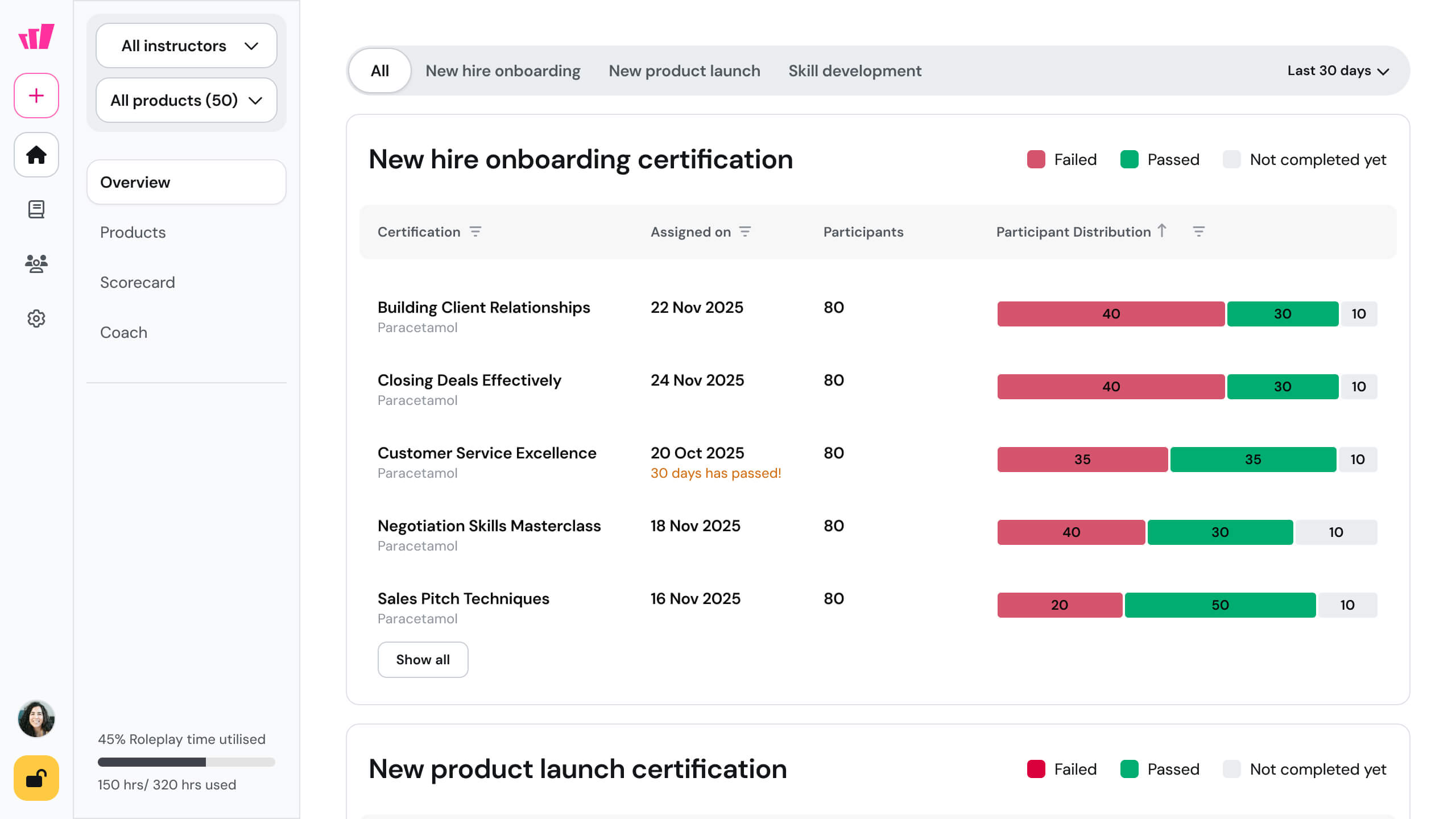
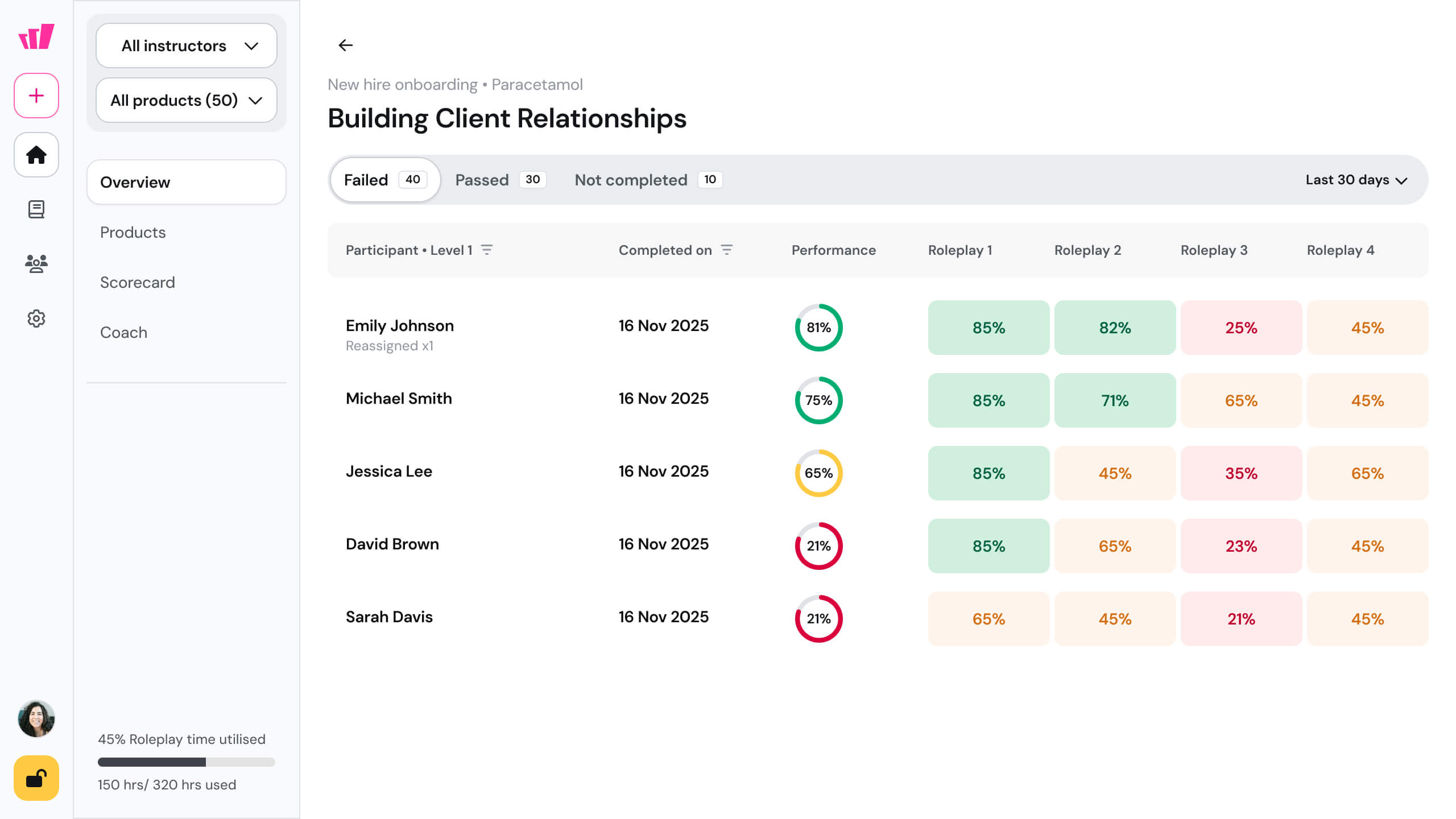
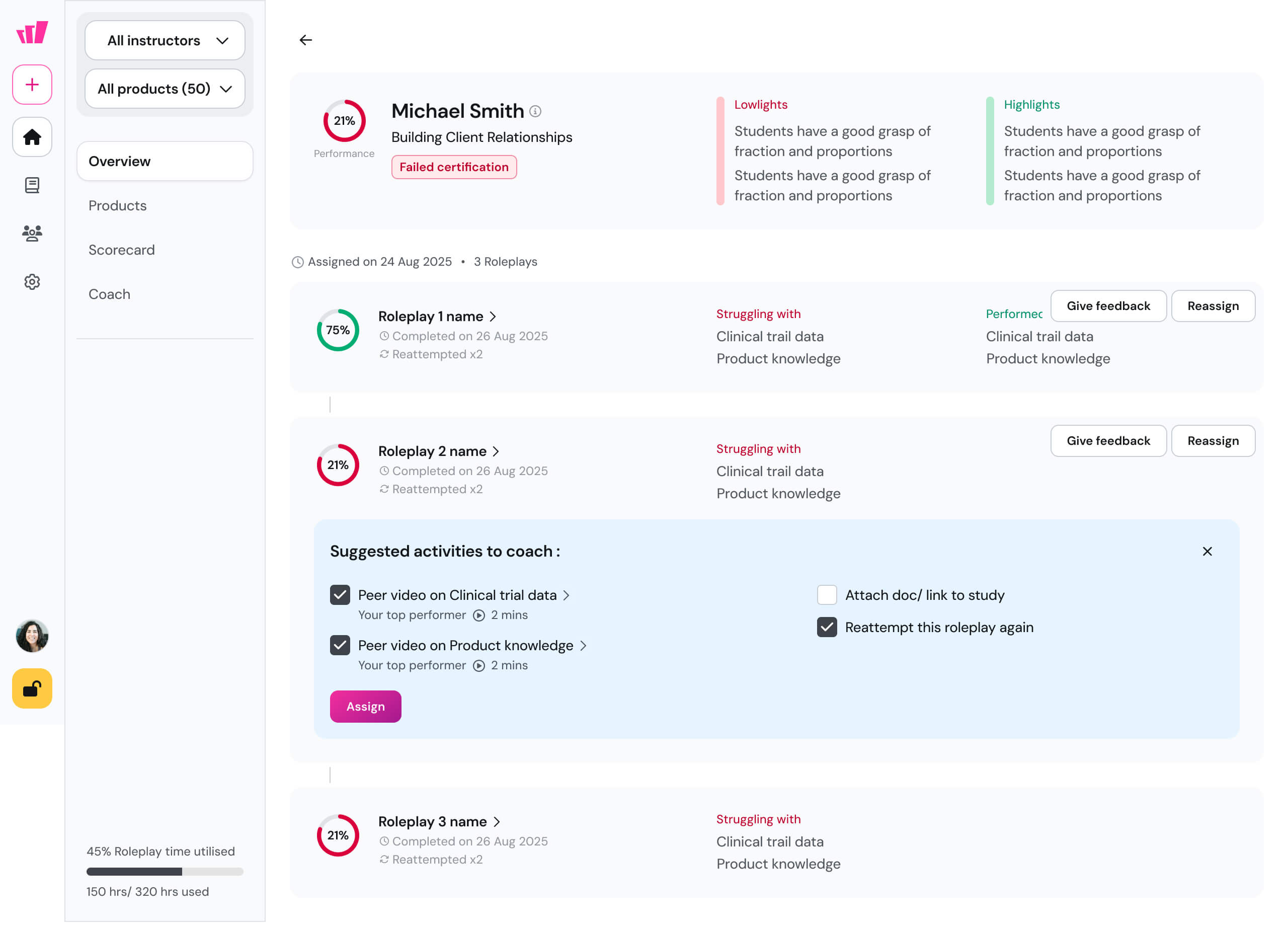
Dashboard to track team’s performance
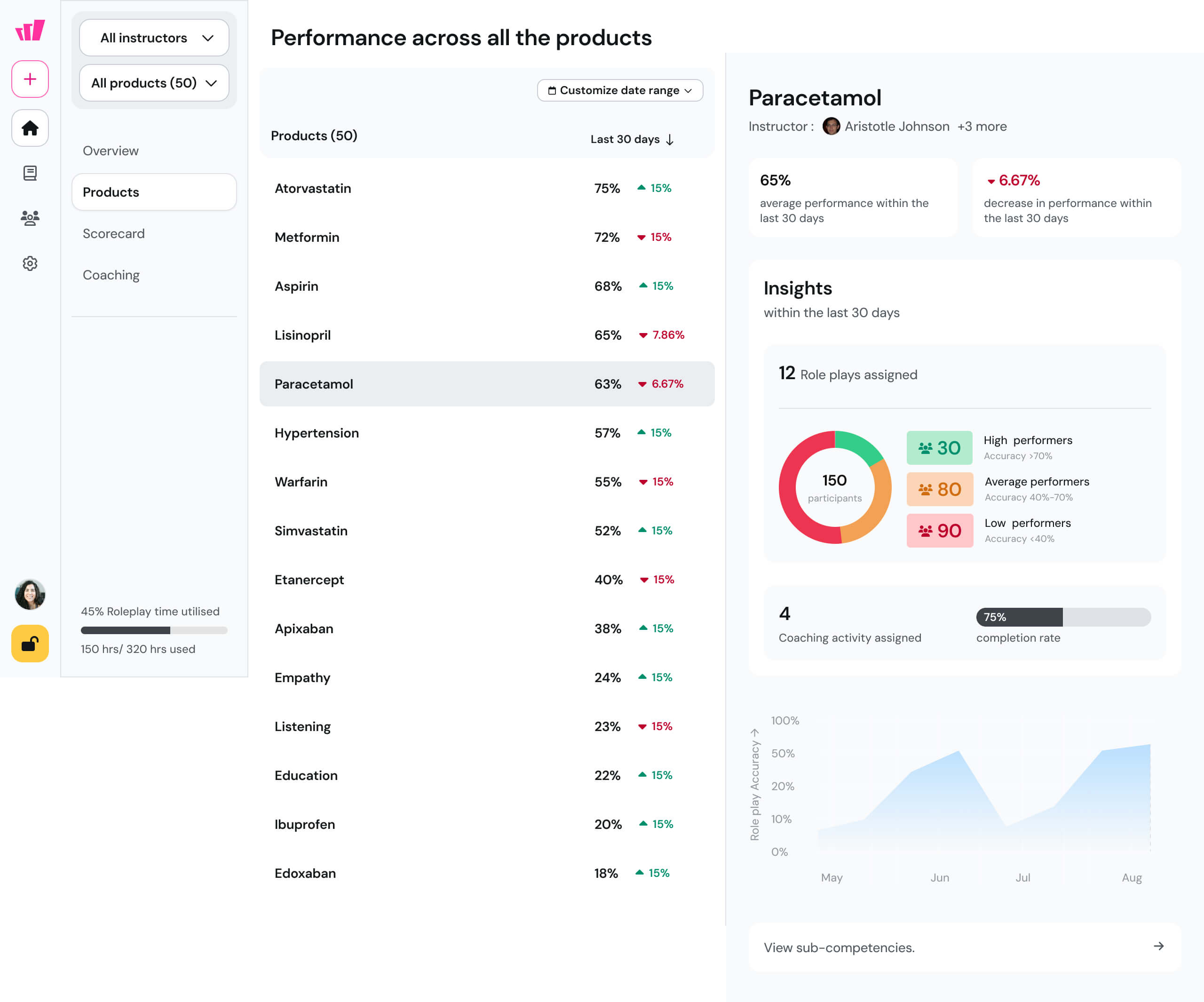
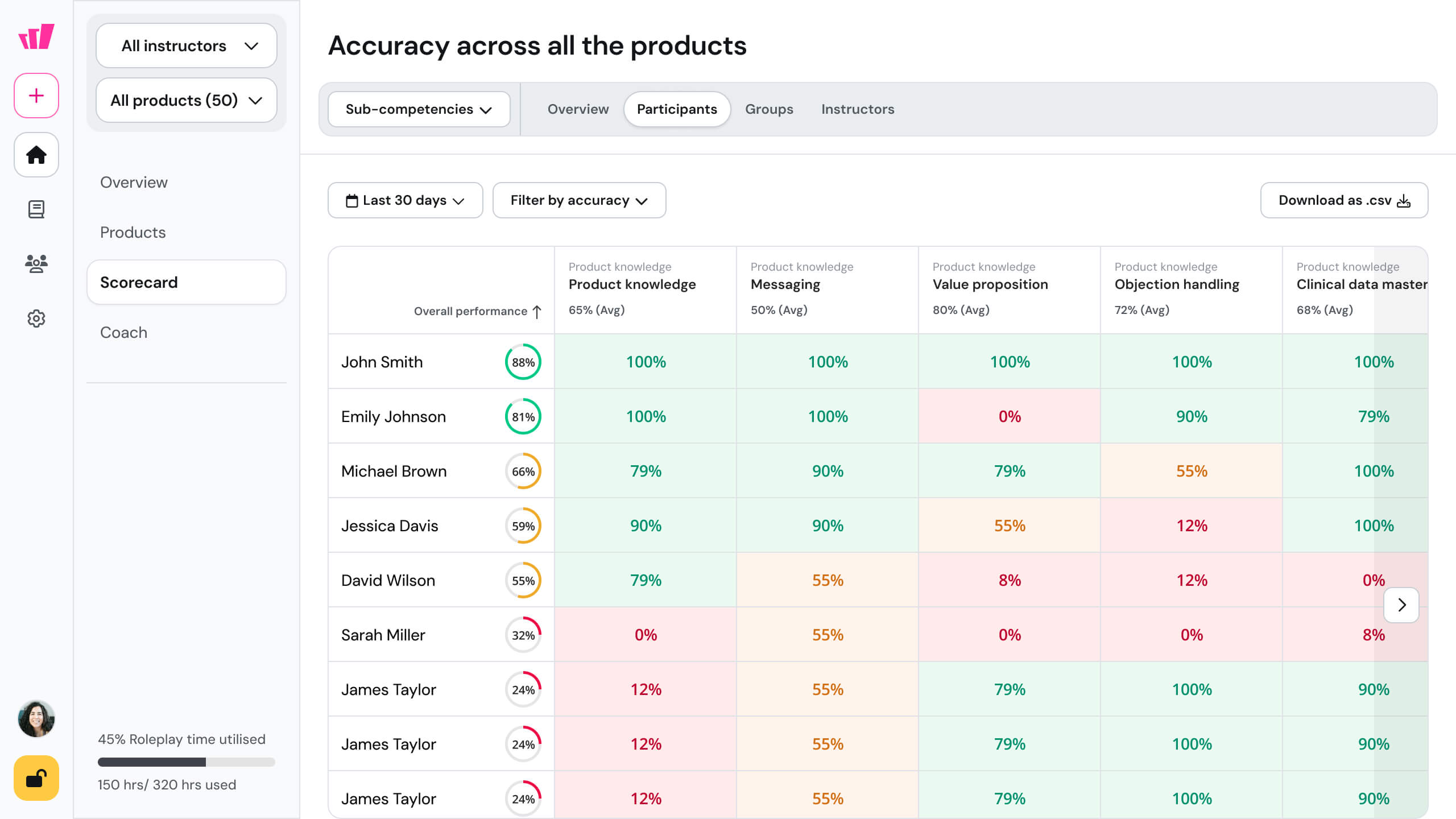
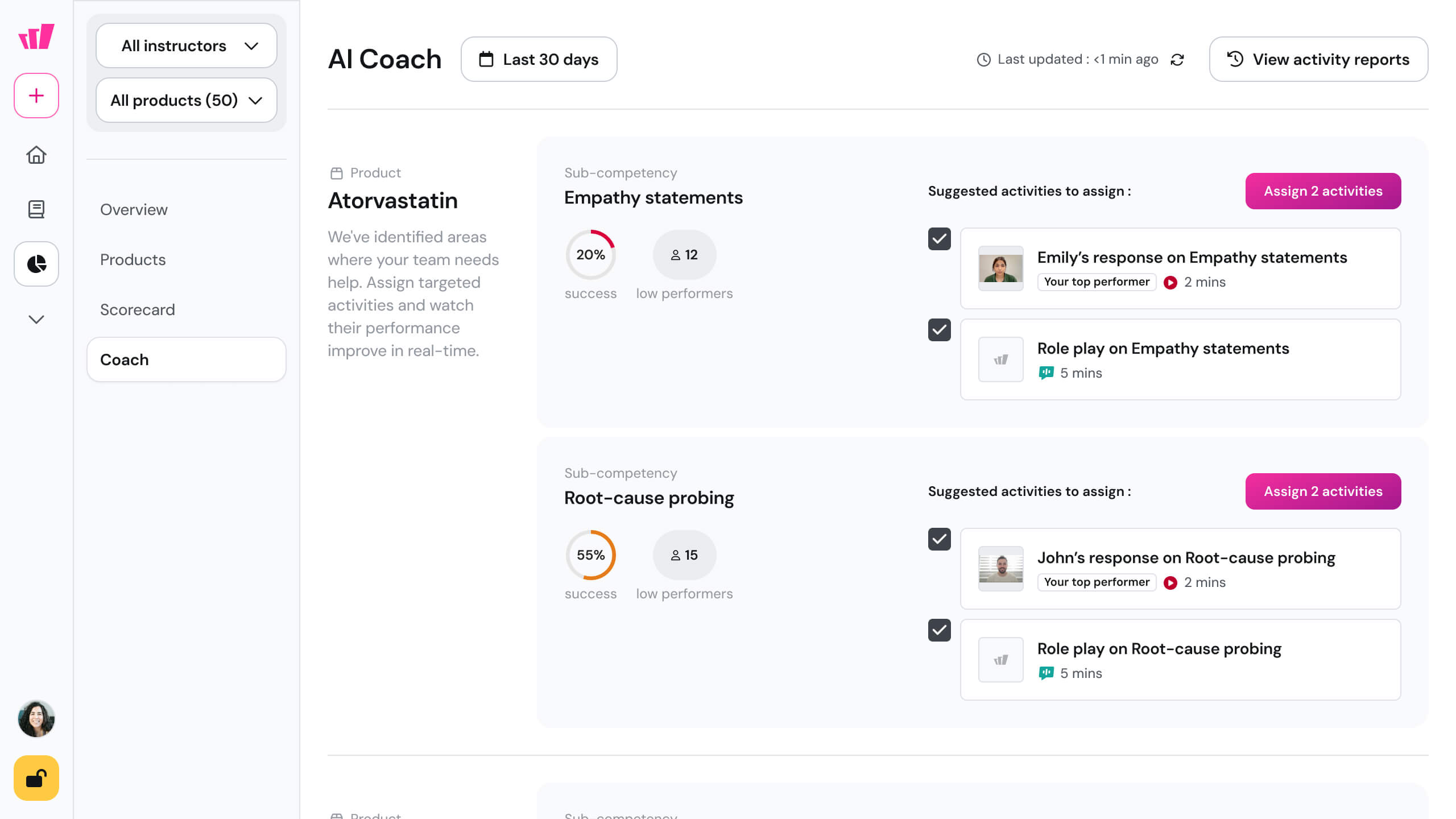

Figma file to preview


After testing the new version, user satisfaction increased significantly and the tool moved into the pilot phase with several prospects creating a clear path for a high-impact sales pipeline.


Thank you for your time
Feel free to say hi 👋 on


Want to explore more?


Not logged in

🟢 Logged in

Not logged in

🟢 Logged in

Not logged in

🟢 Logged in

Not logged in
🟢 Logged in
The approach that unlocked higher student logins.
Read case study

In the pharmaceutical industry, the mantra "practice makes perfect" often hits a wall of reality. For thousands of sales reps, practicing their pitch is frequently the lowest priority on a long list of tasks.
The Current Landscape:
Passive learning:
Training is currently limited to studying documents, watching videos, and taking static assessments.
The bottleneck:
With thousands of reps and small L&D teams, managers can only provide 1-on-1 coaching once per month.
The risk:
Without a safe space to practice, reps are essentially "practicing" on real customers, leading to lost revenue and missed opportunities.
The problem:
Limitations of traditional Roleplay
Insights from user-interviews conducted with Sales managers and L&D leads.
Inability to scale:
Training is currently limited to studying documents, watching videos, and taking static assessments.
Inconsistent feedback:
Scoring is often subjective and prone to manager bias.
Performance anxiety:
Reps often feel nervous or "performative" in front of peers or leadership.
Performance data gaps:
There is a lack of analytics to prove impact or identify specific skill gaps.
Team
Myself, 1 UXR, 1 PM and 6 Devs
Timeline
3 months
Competitor evaluation :
So we started with evaluating our competition to understand how and where can we be better than them.







Insights :
- Very time-consuming to build the roleplay environment.
- The overall experience was confusing.
- The realism of the AI bot is not good enough. Didn’t feel like taking to a person, feels like a bot.
So here’s our chance to build something big!
We’ve identified the opportunity to build an effective AI roleplay environment that allows reps to practice anytime, anywhere, increasing deal sizes and conversation quality.
Key Design Principles:
Scenario intelligence:
The LLM understands the specific nuances of the call (e.g., cold calling vs. negotiation).
Diversified personas:
Bots mirror real-world personalities (enthusiastic, assertive, or even rude).
Human-like interaction:
Low-latency responses and high realism ensure it doesn't "feel like a bot."
Ethical boundaries:
Built-in guardrails against racism, sexism or any discrimination.
The plan
- Testing the concept with Sales Managers and L&D team of the Roleplay environment with a Figma prototype.
- Build the V1 (MVP) based on the feedbacks during the user testing.
- Deploying the tool to the prospects for pilot where we could understand the challenges and areas of improvement.
- Build Sales pipeline
V0 : Concept testing via figma prototype
We used a Figma prototype to walk through the creation process and reporting.
Received positive feedbacks from Sales Managers and L&D teams which gave us the green light for building the roleplay enviroment.
V1 (MVP): Integrated with VAPI and started building.
Initial testing of our functional MVP revealed three challenges:
Context drift:
The bot occasionally lost track of the medical context.
Tone calibrations:
The "assertive" bot was coming across as too hostile.
Conversation issues:
Without deep pharma context, the bot’s questions didn't mirror a traditional sales call.
V2 : Refinement
To solve these, we :
- Provided the LLM with more context by providing fields to add product details, agenda and buyer’s background.
- Fine tuned the tonality and personalities of the bots.
- Let the LLM control the conversation as per the agenda.
After testing the new version, user satisfaction increased significantly and the tool moved into the pilot phase with several prospects creating a clear path for a high-impact sales pipeline.
Witness the roleplay in action!
Dashboard to track team’s performance
Figma file to preview
After testing the new version, user satisfaction increased significantly and the tool moved into the pilot phase with several prospects creating a clear path for a high-impact sales pipeline.


Thank you for your time
Feel free to say hi 👋 on

Want to explore more?


Not logged in

🟢 Logged in

Not logged in

🟢 Logged in

Not logged in

🟢 Logged in

Not logged in
🟢 Logged in
The approach that unlocked higher student logins.
Read case study

In the pharmaceutical industry, the mantra "practice makes perfect" often hits a wall of reality. For thousands of sales reps, practicing their pitch is frequently the lowest priority on a long list of tasks.
The Current landscape:
Passive learning:
Training is currently limited to studying documents, watching videos, and taking static assessments.
The bottleneck:
With thousands of reps and small L&D teams, managers can only provide 1-on-1 coaching once per month.
The risk:
Without a safe space to practice, reps are essentially "practicing" on real customers, leading to lost revenue and missed opportunities.
The Risk:
Without a safe space to practice, reps are essentially "practicing" on real customers, leading to lost revenue and missed opportunities.
The problem:
Limitations of traditional Roleplay
Insights from user-interviews conducted with Sales managers and L&D leads.
Inability to scale:
Training is currently limited to studying documents, watching videos, and taking static assessments.
Inconsistent feedback:
Scoring is often subjective and prone to manager bias.
Performance anxiety:
Reps often feel nervous or "performative" in front of peers or leadership.
Performance data gaps:
There is a lack of analytics to prove impact or identify specific skill gaps.
Team
Myself, 1 UXR, 1 PM and 6 Devs
Timeline
3 months
Competitor evaluation :
So we started with evaluating our competition to understand how and where can we be better than them.
Insights :
- Very time-consuming to build the roleplay environment.
- The overall experience was confusing.
- The realism of the AI bot is not good enough. Didn’t feel like taking to a person, feels like a bot.
So here’s our chance to build something big!
We’ve identified the opportunity to build an effective AI roleplay environment that allows reps to practice anytime, anywhere, increasing deal sizes and conversation quality.
Key design principles:
Scenario intelligence:
The LLM understands the specific nuances of the call (e.g., cold calling vs. negotiation).
Diversified personas:
Bots mirror real-world personalities (enthusiastic, assertive, or even rude).
Human-like interaction:
Low-latency responses and high realism ensure it doesn't "feel like a bot."
Ethical boundaries:
Built-in guardrails against racism, sexism or any discrimination.
The plan
- Testing the concept with Sales Managers and L&D team of the Roleplay environment with a Figma prototype.
- Build the V1 (MVP) based on the feedbacks during the user testing.
- Deploying the tool to the prospects for pilot where we could understand the challenges and areas of improvement.
- Build Sales pipeline
V0 : Concept testing via figma prototype
We used a Figma prototype to walk through the creation process and reporting.
Received positive feedbacks from Sales Managers and L&D teams which gave us the green light for building the roleplay enviroment.
V1 (MVP): Integrated with VAPI and started building.
Initial testing of our functional MVP revealed three challenges:
Context drift:
The bot occasionally lost track of the medical context.
Tone calibrations:
The "assertive" bot was coming across as too hostile.
Conversation issues:
Without deep pharma context, the bot’s questions didn't mirror a traditional sales call.
V2 : Refinement
To solve these, we :
- Provided the LLM with more context by providing fields to add product details, agenda and buyer’s background.
- Fine tuned the tonality and personalities of the bots.
- Let the LLM control the conversation as per the agenda.
After testing the new version, user satisfaction increased significantly and the tool moved into the pilot phase with several prospects creating a clear path for a high-impact sales pipeline.
Witness the roleplay in action!

Kindly unmute the video player to listen.
Thank you for your time
Feel free to say hi 👋 on

Want to explore more?
Not logged in
🟢 Logged in
Not logged in
🟢 Logged in
Not logged in
🟢 Logged in
Not logged in
🟢 Logged in
The approach that unlocked higher student logins.
Read case study